
Why chimneys fall in quakes
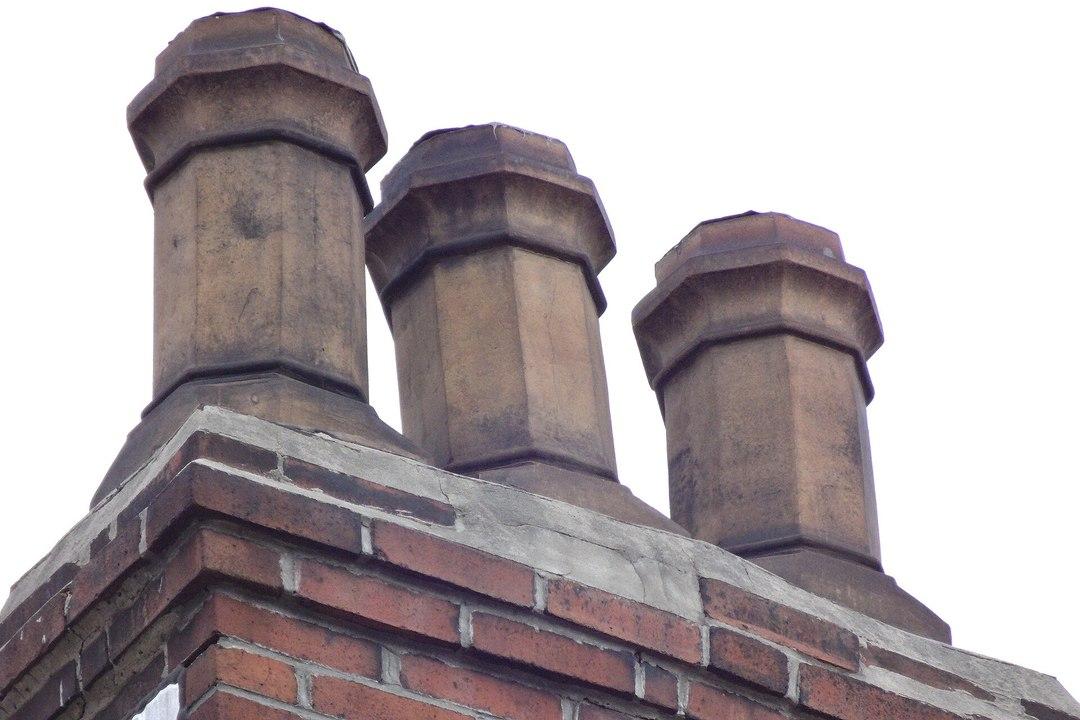
Brick and wood behave very differently when the ground moves. A wood frame flexes and returns. An unreinforced brick column, which is what most older chimneys are, does not flex much at all. It rocks, and the joint where it leaves the roof becomes a hinge. In a strong quake that hinge can crack, and the part above it can topple onto the roof, the yard or a neighbor's driveway.
Santa Clarita knows this firsthand. The 1994 quake shook the valley hard, and brick chimneys were among its casualties. Some stacks that stayed standing cracked at or just above the roof and have carried that crack quietly ever since.
What a retrofit is trying to do
A seismic retrofit does not make a brick chimney quake-proof. It aims to keep the masonry from falling where it can hurt someone or punch through the roof, and to keep the flue usable afterwards where that is possible. Which method fits comes down to the state of the brick and the way the stack meets the house.
The main options
Bracing above the roof. A steel brace is fixed high on the stack and anchored back into the roof framing. The steel takes some of the swing out of the exposed top, so the roofline hinge is not doing all the work. This suits a stack in good condition that stands well above the roof.
Straps at the framing. Steel straps wrap the chimney where it passes floors, ceilings or the roof structure and are bolted into the framing. They tie the column to the house so the two move together rather than pulling apart. Straps are often combined with bracing.
A lighter top. On many chimneys the soundest answer is to take the brick down to the roofline or a little below and rebuild the top in a lighter way, either as reinforced masonry or as a framed chase with a metal flue inside. Less weight up high means less to fall. This is often the right call when the top is already cracked from an earlier quake.
Taking it down. If the fireplace is no longer used and the owner does not want to keep it, removing the stack to below the roof and closing the roof deck removes the hazard entirely. We discuss this option honestly when it fits.
What decides which one we quote
These are the things that point one way or another:
- Brick condition. There is little sense bracing a stack whose joints are sand. Bracing goes on sound masonry; loose masonry gets rebuilt first.
- Height above the roof. A tall exposed top is the part most at risk and the part bracing helps most.
- Existing cracks. A crack at the roofline from the last quake usually means the top comes down.
- How the fireplace is used. If you want to keep burning wood, the rebuilt top needs a sound flue. If you are switching to gas, a lighter chase with a vent may suit better.
- Roof type. Tile roofs take more care to work around than shingles.
None of these options carries a published figure on our list, because each is sized to the stack. We start with a Level 2 inspection with a video scan, $390, which shows whether the flue tile cracked in a past quake. Where the work leads to a new top, a cap quoted after we measure usually finishes it, and if the chimney stops serving a wood fire, a gas insert set into the old opening runs $2,800 to $5,600.
Ask for a seismic scope, and on the form tell us how far the stack rises above the roof and whether you can see any crack where it leaves the roofline.
What the seismic visit checks
A quake assessment is mostly a mason reading the stack for stress. On the roof we measure how far the brick rises above the deck, look for a horizontal crack in the joints at the roofline and check whether the crown has shifted off the stack. We press on the top courses to feel for movement. In the attic we look at the gap between the brick and the framing; if that gap is bigger up high than down low, the stack has been rocking. The camera then shows whether the tile inside cracked or slid at the same level. Together those tell us whether bracing is enough or the top has to come down.
What we do not promise
We describe bracing, straps and rebuilds in general terms and size them to your chimney. We do not cite code sections, promise that a retrofit will qualify for a rebate or claim a stack will survive any quake. What we can tell you is where your chimney is weakest and what each option does about that.
How the masonry is done
On a rebuild above the roof, we take the brick down by hand to a course that is still tight, save sound brick for the show face and lay the new top with reinforcing tied into the stack below. Mortar is matched to the old work so the line between old and new is hard to find. The new crown is cast with an overhang and a gap at the flue tile, and a cap goes on last.
Our seismic retrofit service page has more detail, and our rebuild guide explains how the price of a new top is built.
Book a quake look at your chimney
If your chimney stood through the last big shake, it is worth knowing how well. Tell us your Santa Clarita address through the contact page, along with what you can see from the yard, and we will arrange a visit to the roof.
Rather Have a Mason Look at Yours?
Chadwick Chimney Group reads the brick, the joints, the crown and the flue, then writes a scope with a price on each line. Book from Santa Clarita, Burbank, Glendale, West Hollywood or another town on our list.